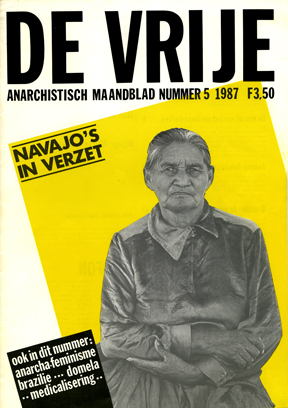
DE VRIJE
ANARCHIST MONTHLY PUBLICATION, ISSUE NUMBER 5, 1987
NAVAJOS RESISTING
Against Deportation To Radioactive Promised Land
In De Vrije’s issue of August last year, the background of the deportation plan of a large group Navajo Indians who live above ground containing minerals worth billion dollars, has been extensively described. As the war expected to break out on July 6th 1986 between the American army and the unbending Indians did not occur, silence has fallen in the media about Big Mountain. The author of this article, who just came back after spending several months on the reservation, shows that shocking events are still taking place over there. For instance, the new ‘thuislanden’ [literally ‘homelands’, but the word ‘thuisland’ had become characteristic of Apartheid South Africa] reserved for the Navajos turn out to be heavily polluted by radioactivity, as a consequence of an environmental disaster [Church Rock, NM].
The warm Southwest of the United States is going through a quick development. The fast growing cities in the ‘Sunbelt’, with their high-tech industries, their military companies and bases, need cheap power. The developers have spotted out a large portion of Indian land in the Northeast of Arizona which has been used jointly for centuries by two tribes, the Hopis and the Navajos. In the middle of this territory – about which someone ever remarked that you could nowhere be so far from the United States and still inside – lies Big Mountain, which is sacred for Indians. Geological research in the 1950s showed that Big Mountain stands above billions of tons of easy to extract coal. However, the huge excavators can only be brought there if the Indian inhabitants leave. Those are very traditional Indians, many of whom still live according to their old cultural customs. “Who leaves disappears” they say, especially the older people, who feel strongly bound to their land and Mother Earth. They won’t leave voluntarily; a mass deportation is thus necessary. Air conditioners against recalcitrant, backward Indians.
If you call the public information service of the BIA, or talk with a press relations officer of Peabody Coal Company, you will get to hear strong denials if you suggest that greed for electricity produced by coal power plants is the underlying reason why hundreds of Hopi and tens of thousands of Navajos should leave their lands. But the Indians involved know better. A particularly obscure network, in between called the “Mormon connection”, in which, apart from Indians brought up in Mormon boarding schools, Mormon lawyers, members of Congress and mining companies play a key role, has devised a powerful trick to divert public attention. Through their efforts both the general public and the American government have been brought to believe that the moving of so many Indians has been made necessary to prevent a tribal war between Hopis and Navajos.
A few tips out of the manual of modern land theft. Suppress the word deportation, and replace it by ‘relocation’. Keep secret the real motives, but depict the Navajos as blood thirsty, wild people who want to bury in the ground the peaceful Hopis. Deny any difference between the westernized Indians members of tribal councils imposed by the American government, en de traditional Indians who don’t want to have anything to do with that pseudo-democratic form of leadership. Divide the common use area with barbed wires in two halves – one for the Hopi and one for the Navajo tribal councils, so that those can lease the land to mining companies. Clear the land as much as possible from Indians by forcing those who live at the wrong side of the fence to move elsewhere. Put up an official relocation commission to guide the realization of the project as humanly as possible. Let everybody know that the Indians involved will be largely compensated for any loss. Be sure that compliant media will repeat the tribal war story without asking any further questions. Thus the Mormon connection seems to have all the trumps to perform a perfect magic trick. But does it go so smoothly in reality?
ALCOHOLISM AND SUICIDE
July 6th 1986 is the last day, for the Indians living on the wrong side of the barbed wire, to leave ‘voluntarily’. It concerns thousands of Navajos who have remained; the hundred Hopis have already left the land given to the Navajo tribal council. Many people fear that, after the deadline, the National Guard will use violence to remove the stubborn ones from their land. And it could lead to a bloodbath: hundreds of Navajos have announced that they will NEVER leave. In between it has become clear for more and more people how disastrous the consequences of moving have been until now. 25% of the people who have moved have already died of alcoholism, suicide and other causes linked to the relocation. Statistics make clear, though hyper mobile Americans can hardly imagine it, that moving, for those traditional Indians, literally means death. It is likely that because of the national and international attention raised by the case in the summer of 1986 – when the ultimatum expired three foreign film teams were present – the National Guard has not intervened yet.
At the moment, more than a half year later, a lot of that attention has subsided. Only the imminent threat of a confrontation, as it existed last summer, was interesting enough for the media. In between, however, the relocation operation has been going on, slowly but uninterrupted. And hundreds of families still refuse to leave the land where they were born and were their navel string is buried. First manipulation and exhaustion is tried. In the end the BIA (a branch of the Interior ministry) helped by law enforcement agents enacts the transport of the people.
In the winter of last year, it became clear to the American Congress that the moving operation had to be somewhat improved. Many Indians who had moved to small towns on the border of the reservation had already lost their houses to crooked real-estate speculators. Moreover, Congress ruled that the process of absorbing the people was also unsatisfactory. ‘Accompanying social measures’ were necessary and new houses should be built to house Indians closer to the Navajo reservation. The BIA bought about 1500 sq. kilometers of land for that purpose. Those so-called ‘New Lands’ were at the southeast border of the Navajo reservation. This spring prefab houses would arise from the ground in three months. The commission wants to increase the tempo of the relocation. At present, with about one family moving each work day, it goes much too slow. At that pace, commission members will be retired long before the relocation is completed. Some numbers. When the ultimatum expired in the summer of 1986, only 40% of the concerned families had moved, that is thousand out of 2600 families. In the rest of the year over hundred more will follow. The relocation commission considers that an average family comprises 4.5 members. In the words of the commission, those people have moved voluntarily. However, the ‘voluntary’ character of the moving can be doubted when you consider that, as a consequence of the relocation law, those Indians had to give up 90% of their cattle, were not allowed to build anything new or to do any repairs to existing shelters or houses. Add to this that the law was passed in 1974, and that Navajos much depend on sheep for their living, and you will understand that it could not have happened without pressure.
NOBODIES
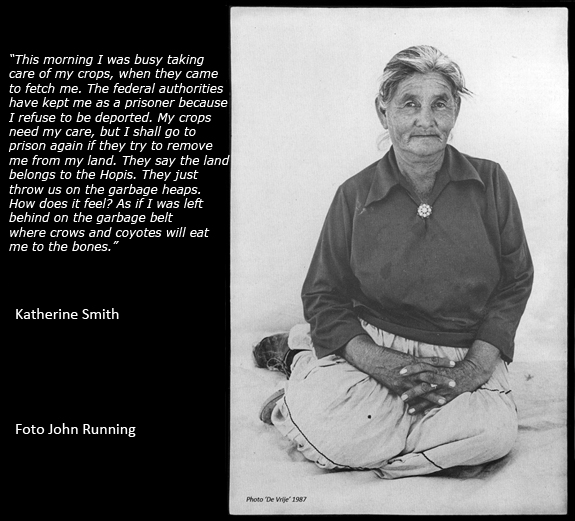
As said above, there are few hundred families who will never be intimidated and leave. One of the recalcitrant Indians, Pauline Whitesinger, discovered that her name appears, without that she knew about it, on a list of people who have applied for a moving premium. The authorities keep minimizing the problem doing as if it concerned only a few related families on Big Mountain. The truth is that nobody really knows how many people are still in the area now, despite of the expiring of the ultimatum. Roughly, you can distinguish the following groups: first the Navajos who have announced publicly that they will never move, and those who also resist deportation but do not claim it. Then there are those who ‘want’ to move but for whom there is no housing available. Further, many Indians have left their house of origin and have been wandering around ever since. And from those who have in between been convinced to move, appear about thirty percent not to be found anywhere: they could not stabilize in their new situation. Finally, there is a group of unknown size of ‘nobodies’: people who have not been identified yet by civil servants and do not appear in any statistics. It is no surprise that Big Mountain support groups call not to take part in any government game about what is the exact number of resisters against the relocation. Each family, each individual who is deported is one too much.
Let’s go back to the ‘New Lands’, the Promised Land to where the exodus should lead. The newly appointed ‘counselors’, a kind of social gentlemen council, must stimulate – in a friendly but forcible way – the people to move after all. They have not yet dared to show themselves at the most radical Navajos’. Practically nobody wants to go to the new ‘thuislanden’ [homelands], even when lured by tricks such as promising that who comes first may choose the best piece of land. The new houses are built in a kind of Soweto ghetto style, in total opposition with the scattered way of living in the traditional hogans.
There is one more reason not to move to the New Lands. Part of the New Lands lies in the basin of the Puerco River. In 1979 a dike enclosing a mud pool of uranium mining waste broke. This was the biggest environmental disaster in the history of the United Sates. Radioactive waste and very poisonous heavy metals came into the Rio Puerco in large quantities. But as it happened here, in a remote area where only Indians live, it did not draw much attention. After the breaking of the dike signs appeared along the Rio Puerco reading that water was unsafe for both humans and animals. In 1985 some measurements have been carried out in the river water near Chambers, a small place that now lies in the middle of the New Lands. The result was that it contained 1500 picocurie per liter which is fifty times more than the officially tolerable maximum. From the twenty-one sources now used by communities, half receive water from underflows of the Rio Puerco. The water of these sources is in many cases radioactive.
MAC DOLLARS
How does the case look politically in between? In November 1986 there have been Senate elections in the United States. The Democrats got a majority and the chance that Washington withdraws the relocation law is a little less small. An important character in the whole moving operation, Barry Goldwater, leaves the stage. The extreme rightist Senator of Arizona, who one year ago was still claiming that, if necessary, he would personally help the National Guard to remove the Navajos, is now retired.
In the same month of November there were also elections in the Navajo reservation. Unfortunately, Peter MacDonald was elected chairman of the tribal council, be it with a tight majority. This man, who has already been chairman in the 1970’s and in January 1980, got the nickname Mac”Dollar”. At the time, he was supposed to be the richest Indian in the world and he might still be. Lured by his attractive conditions, many coal and uranium mining companies have settled on the reservation. Peabody Coal, for instance, pays only 15 cent for each ton of coal it extracts. When entering into agreements, MacDonald always managed to get royalties and bribes for himself. It is frustrating that such a thoroughly corrupt character is elected again after a four years break. An aspect which must have played a major part is the fact that he radically campaigned against relocation. Many Navajos had got fed up with the useless attempts of MacDonald’s predecessor, Peterson Zah, to find a workable compromise.
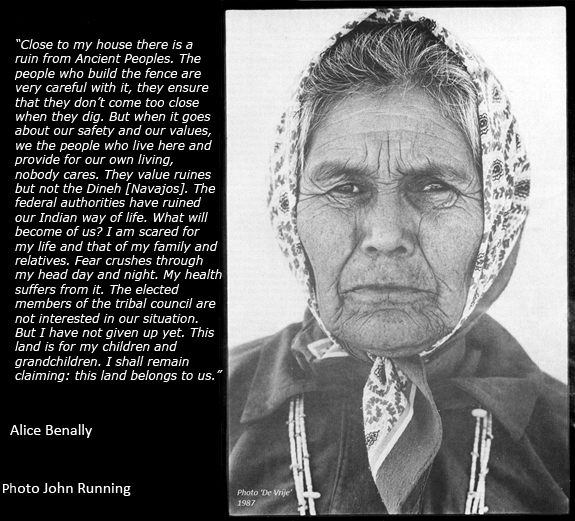
As a true populist leader, MacDonald knows much better how to play with emotions. It goes like this: we Navajos are a proud people. We won’t let the Hopis teach us; nobody can walk over us, etc. It is clear that for the money loving MacDonald the enemy is not in Washington, but in the building of the Hopi tribal council. And in that building, they are naturally delighted about the new Navajo leader. The members of the Hopi tribal council, most of whom have been educated in Mormon boarding schools and also speculate on economical improvement, thankfully accept the challenge. Now at last those aggressive Navajos reveal their true nature, the government must move those people somewhere else, otherwise we, a numerically much smaller people, shall be crushed. The difference between ‘traditionalists’ and ‘progressives’ shows again. The ‘progressive’ Indians who come back to their homeland, after a long career outside, to become member of a tribal council, for instance, or to sell out the land on which they were born, are totally alienated from the Indians who don’t want to hear anything of those interferences from outside.
On the Hopi reservation, only a very small minority shows up for the tribal council elections. The others stay at home as a protest and do not get involved with that circus. But then, the tribal council set up according to Western model decides about what happens on the reservation. A majority of the Navajos does take part in the elections. The political leaders know how to attract people to elections meetings by offerings free meals. Many Navajos vote according to their clan relationship with the candidate. MacDonald has, from that point of view, the advantage of belonging, through his parents, to two of the biggest clans on the Navajo reservation.
FILIBUSTER TACTIC
In those last elections there is, however, a glimpse of hope: Larry Anderson, member of the American Indian Movement (AIM), has been elected to the tribal council. When MacDonald previously was chairman he had this activist thrown into jail several times. Among others, it happened when Anderson and other AIM members came to help the heavily exploited women working at a Fairchild semi-conductors factory and undertook an armed occupation of the place. The irony is that this action caused the AIM to lose a lot of support from Navajos, as Fairchild found the situation to hot and moved to the ‘third world’. This meant that an important source of jobs had gone.
Larry Anderson will defend, if necessary with his life, the people who refuse to move. However, the question is if he can do much in the tribal council. He already announced that he would not hesitate to use the ‘filibuster’ tactic. This means that a speaker in the council keeps talking so long about a subject that it becomes impossible to take a decision.
The coming months will be decisive, as well for the moving operation as for the resistance against it. The tactic of the government might be to declare the moving operation ‘completed’ as soon as the ghettos in the New Lands are built. Then they could incite some Hopi ranchers against the Navajos, encourage them to go with their flocks to the areas where the still recalcitrant Navajos are, as for instance in and around Big Mountain. The inevitably ensuing tensions would increase the pressure on the Navajos to leave their land. And the pushed forward Hopis could demand for external help. But still, the possibility of mass deportations, as the building of new houses on the New Lands is almost completed, is certainly not unthinkable.
DIRECT ACTIONS
First, the support groups try to move the newly elected Congress to withdraw the relocation law or at least to pronounce a moratorium on new deportations. So there could be a possibility for the Hopis and Navajos to come to an understanding, preferably outside the tribal councils. This is very much needed after years of being victims of the divide and rule tactic. Along with that lobbying in Washington, there are attempts to have the law declared void on the basis that it constitutes a violation of traditional Indians’ religion. Freedom of Religion is guaranteed by the First Amendment of the American Constitution.
Some more radical groups do not want to wait and see if the juridical game and the lobby campaign might get the law withdrawn. They advocate suppressing the law with words and deeds: on the one hand by organizing hard actions against the involved companies (among others Peabody Coal, Bechtel Corporation, Boeing), on the other hand by giving the Indians who want to stay the actual possibilities to do so. It could be done, for instance, through work brigades (forbidden by the relocation law) repairing existing hogans and building new ones. Another possibility is to bring sheep from outside to replace those that have been confiscated. The support group in Berkeley organizes a form of economical help in which traditionally woven clothes are bought and then sold for a fair price. With the money earned, more clothes are bought.
But those direct actions can also bring major disadvantages. For instance, it can sound good to repair existing dwellings and build new ones, but will the building teams be there too if the Indian families get harassed by patrolling police later? And won’t the alternative ‘idealistic import’ of clothes create a new dependence, in the sense that people will expect a guaranteed flow of goods, which might subside when the commotion about the events is over? Moreover, that kind of help can easily create frustration on the reservation in the style of: it’s always the same people who get help, or: there will always be something fishy afterwards [i.e. some people will manage to get some bribes].
LOW FLYING PILOTES
Once more appears from that kind of embarrassing questions that we have to do with an Indian culture which is totally different from ours. The people from Big Mountain never had much to do with money, media or the presence of Whites showing solidarity. After all the interferences from government civil servants, counselors, Indian police, low flying military jets pilots, anthropologists, missionaries, and now a group of sympathizing outsiders, those Indians want to be left alone at last.
During several meetings, the Ancients from the Hopi and Navajo tribes have let us know: you are white, you speak English. The government in Washington is white too. We do not understand that law they made there. If you want to help us, you know better what has to be done against it. A different, not necessarily less radical strategy for the support groups would be to develop as little activities as possible on the reservation and concentrate all attention on the power centers, thousands of miles away, where the destiny of those people is decided.
JAN
DE VRIJE
ANARCHISTISCH MAANDBLAD NUMMER 5 1987
NAVAJO’S IN VERZET
Tegen Deportatie Naar Radioaktief Beloofd Land
English translation: click here
In De Vrije van augustus vorig jaar werd uitgebreid aandacht besteed aan de achtergronden van het deportatieplan voor een grote groep Navajo-Indianen die bovenop een miljardenschat aan delfstoffen leven. Dit plan betekent voor hen volkerenmoord. Sinds op 7 juli ’86 de verwachte oorlog tussen het amerikaanse leger en de onverzettelijke Indianen niet uitbrak is het in de pers stilgevalen rond Big Mountain. De auteur van dit artikel, die net terug is van enkele maanden op het reservaat, laat zien dat de schokkende gebeurtenissen daar echter doorgaan. Zo blijken de nieuwe thuislanden voor de Navajos zwaar radioaktief vervuild ten gevolge van een milieuramp.
Het warme zuidwesten van de Verenigde Staten maakt een expansieve groei door. De snel uitdijende steden in deze ‘Sunbelt’ met hun high-tech industrieën, militaire bedrijven en bases hebben behoefte aan goedkope stroom. De ontwikkelaars hebben hun oog laten vallen op een omvangrijk stuk indiaanse grond in het noordoosten van Arizona dat al sinds eeuwen door twee stammen, de Hopis en de Navajos, gemeenschappelijk wordt gebruikt. Midden in dit gebied, waarover iemand eens opmerkte dat je nergens zo ver van de Verenigde Staten kunt wegrijden terwijl je er toch inzit, ligt de voor Indianen heilige Big Mountain. Uit geologisch onderzoek in de jaren vijftig bleek dat Big Mountain torent op miljarden tonnen eenvoudig te winnen steenkool. De kolossale graafmachines kunnen echter pas hun gang gaan als de indiaanse bewoners vertrekken. Het gaat om zeer traditionele Indianen, die nog voor een groot deel volgens de oude kultuurgebruiken leven. ‘Wie verhuist, verdwijnt’, zeggen vooral de ouderen, die zich sterk met hun grond, moeder aarde verbonden voelen. Uit zichzelf gaan ze niet weg; een massale deportatie is dus nodig. Airconditioners tegenover weerspannige, achterlijke Indianen.
Als je de voorlichtingsdienst van het Bureau voor Indiaanse Zaken belt, of spreekt met een persvoorlichter van Peabody Coal Company, dan zul je heftige ontkenningen kunnen horen op de suggestie, dat de honger naar door kolenkrachtcentrales geproduceerde elektriciteit de achterliggende reden is, dat honderd Hopis en tienduizend Navajos hun grond moeten verlaten. Maar de betrokken Indianen weten wel beter. Een bijzonder ondoorzichtig netwerk dat zo langzamerhand de ‘mormoonse connectie’ is gaan heten, en waarin, naast op mormoonse kostscholen grootgebrachte Indianen, ook mormoonse advokaten, Congresleden en mijnbouwbedrijven een sleutelrol spelen, heeft een machtige bliksemafleider geconstrueerd. Door hun inspanningen is zowel het publiek als de amerikaanse regering gaan geloven, dat een verhuizing van zoveel Indianen nodig is om een stammenoorlog tussen Hopis en Navajos te voorkomen.
Een aantal tips uit het handboek voor moderne landroof. Schrap deportatie, en noem het ‘relocatie’: hervestiging, verhuizing. Verdoezel de werkelijke reden, maar schilder de Navajos af als bloeddorstige wilden die de vreedzame Hopis de grond in willen stampen. Ontken het verschil tussen verwesterde Indianen in de door de amerikaanse regering opgelegde stamraden, en de traditionele Indianen die niets met deze quasi-democratische bestuursvorm te maken willen hebben. Verdeel het gemeenschappelijk gebruikte gebied met een prikkeldraadhek in twee helften – één voor de Hopi- en één voor de Navajo-stamraad – zodat die in staat zijn de grond elk voor zich aan de mijnbouwmaatschappijen te verpachten. Maak dan de grond alvast zoveel mogelijk Indiaan-vrij door die Indianen die aan de verkeerde kant van het hek wonen, te dwingen naar elders te vertrekken. Stel een officiële relocatiecommissie in die het project zo humaan mogelijk moet gaan begeleiden. Verkondig overal in het rond dat de betrokken Indianen ruimschoots schadeloos zullen worden gesteld. Vertrouw erop dat een gedweëe pers het stammenoorlog verhaal herhaalt en verder geen vragen stelt. Aldus lijkt de mormoonse connectie alle troeven in handen te hebben voor en vlekkeloze verdwijntruc. Maar verloopt het in de praktijk even gladjes?
ALCOHOLISME EN ZELFMOORD
6 juli 1986 is de laatste dag, waarop de aan de verkeerde kant van het prikkeldraadhek wonende Indianen nog ‘vrijwillig’ kunnen vertrekken. Het gaat dan nog om duizenden overgebleven Navajos; alle honderd Hopis hebben het aan de Navajo stamraad toebedeelde gedeelte al verlaten. Veel mensen maken zich zorgen dat de Nationale Garde na deze ‘deadline’ de halsstarigen met geweld van hun grond zal jagen. En dat zou een bloedbad worden: honderden Navajos hebben laten weten nooit, maar dan ook nooit, te zullen vertrekken. Inmiddels is het steeds meer mensen duidelijk geworden, welk een desastreuze gevolgen de verhuizing tot dan toe heeft gehad. Een kwart van de mensen die zijn verhuisd, is reeds gestorven aan alcoholisme, zelfmoord en andere op de verhuizing terug te voeren oorzaken. De statistieken maken duidelijk, wat veel hypermobiele Amerikanen zich nauwelijks voor kunnen stellen: dat de verhuizing voor deze traditionele Indianen letterlijk de dood betekent. Waarschijnlijk vanwege de grote nationale en internationale aandacht die de zaak in de zomerdagen van 1986 begint te trekken – op het moment van het verstrijken van het ultimatum waren er drie buitenlandse filmploegen aanwezig – grijpt de Nationale Garde vooralsnog niet in.
Op dit moment, ruim een half jaar later, lijkt een groot deel van die aandacht te zijn weggeëbd. Alleen de directe dreiging van een confrontatie, zoals die de afgelopen zomer in de lucht hing, was interessant genoeg voor de media. Intussen is echter de verhuizingsoperatie langzaam maar zeker ononderbroken voortgegaan. En nog steeds weigeren honderden families de grond waar ze geboren zijn en waar hun navelstreng is begraven te verlaten. Men probeert het eerst via manipulatie en een uitputtingsslag. Uiteindelijk moet het Bureau voor Indiaanse Zaken (een onderdeel van het Ministerie van Binnenlandse Zaken) met behulp van de sterke arm de wet kracht bijzetten en het mensentransport realiseren.

In de winter van het vorig jaar werd het ook het amerikaanse Congres duidelijk, dat er wat moest worden bijgevijld aan de verhuizingsoperatie. Veel van de Indianen die op dat moment al naar grensstadjes aan de rand van het reservaat waren verhuisd, waren hun huis inmiddels kwijtgeraakt aan frauduleuze onroerendgoed speculanten. Bovendien, zo oordeelde het Congres, schortte het nogal aan de opvang van de mensen. Er was ‘sociale begeleiding’ nodig en er zouden nieuwe huizen worden gebouwd om de Indianen dichter bij het Navajo reservaat te kunnen onderbrengen. Daartoe kocht het Bureau voor Indiaanse Zaken zo’n vijftienhonderd vierkante kilometer grond aan. Deze zogenaamde ‘New Lands’ grenzen ten zuidoosten aan het Navajo reservaat. Dit voorjaar zullen daar in drie maanden tijd geprefabriceerde huizen uit de grond worden gestampt. De commissie wil het tempo van de verhuizing op gaan voeren. Nu gaat dat, met ongeveer één familie per werkdag, veel te langzaam. Met die snelheid zijn de commissieleden allang gepensioneerd alvorens de verhuizing ooit zal zijn voltooid. Even wat getallen. Op het moment van het ultimatum in de zomer van 1986 is pas veertig procent van de ‘daarvoor in aanmerking komende’ families verhuisd, oftewel duizend van de 2600 families. In de rest van dat jaar komen daar nog ruim honderd bij. De relocatiecommissie gaat uit van een gemiddelde van 4,5 personen per gezin. In de woorden van de commissie zijn al deze mensen vrijwillig verhuisd. Deze ‘vrijwilligheid’ komt echter wel in een ander licht te staan als je bedenkt, dat als uitvloeisel van de verhuizingswet de betrokken indianen hun veestapels met negentig procent moesten inkrimpen, geen nieuwe onderkomens meer mochten bouwen en geen reparaties meer mochten uitvoeren aan reeds bestaande behuizing. Voeg daarbij, dat de wet al in 1974 werd aangenomen, plus het feit dat de Navajos voor hun levensonderhoud van de schapen afhankelijk zijn, en je weet dat één en ander niet bepaald in een ongedwongen sfeer is verlopen.
NOBODIES
Zoals gezegd zijn er enkele honderden families die zich nooit zullen laten wegintimideren. Eén van de weerbarstige Indianen, Pauline Whitesinger, is er achter gekomen dat haar naam buiten haar medeweten voorkomt op een lijst van mensen die een verhuispremie hebben aangevraagd. Door de overheid wordt de omvang van het probleem voortdurend gebagatelliseerd, alsof het om enkele verwante families op Big Mountain zou gaan en meer niet. De waarheid is, dat niemand echt goed zicht heeft op de hoeveelheid mensen die er nu nog, ondanks het verstrijken van het ultimatum, in het gebied verblijft. Grofweg zijn er de volgende groepen: allereerst de Navajos die publiekelijk kenbaar hebben gemaakt dat ze nooit zullen verhuizen, plus de mensen die zich ook tegen deportatie verzetten maar dat niet aan de grote klok hangen. Dan heb je de mensen die wel ‘willen’ verhuizen, maar waarvoor geen vervangende woonruimte beschikbaar is. Verder hebben veel Indianen hun oorspronkelijk huis verlaten en zijn aan het zwerven geslagen. En van degenen die zich hebben laten overreden blijkt inmiddels zo’n dertig procent onvindbaar: zij konden het in hun nieuwe situatie niet bolwerken. Tenslotte is er nog een groep met onbekende omvang van de ‘nobodies’: mensen die door de ambtenaren nog niet zijn neergepind en in geen enkele statistiek voorkomen. Het zal geen verwondering wekken, dat de Big Mountain steungroepen oproepen om niet mee te doen aan een stoelendans met de regering over wat nu precies het juiste aantal ‘resisters’ tegen de verhuizing is. Elk gezin, elk individu dat wordt gedeporteerd, is er één teveel.
Terug naar die ‘New Lands’, het Beloofde Land waarheen de exodus zou moeten leiden. De nieuw aangestelde ‘counselors’, een soort sociale raadsheren, moeten de mensen vriendelijk doch dwingend stimuleren om toch vooral maar te vertrekken. Bij de meest radicale Navajos durven ze zich nog niet te vertonen. Praktisch niemand wil naar de nieuwe thuislanden, ook al worden er lokkertjes uitgedeeld zoals het aanbod dat wie het eerst komt, de beste grond mag uitkiezen. De nieuwe woningen worden gebouwd in een soort Soweto-gettostijl, compleet tegengesteld aan de ruim verspreide woonvorm in traditionele ‘hogans’ (cirkelvormige houten huizen).
Er is nog een belangrijke extra reden om niet te verhuizen naar de New Lands. Een deel van de New Lands ligt namelijk in het stroomgebied van de Puerco rivier. In 1979 breekt een dam rond een modderpoel met ertsafval van een uraniummijn. Op dat moment vindt de grootste milieuramp plaats uit de geschiedenis van de Verenigde Staten. Radioaktief materiaal en zeer giftige zware metalen komen in grote hoeveelheden in de Rio Puerco terecht. Maar omdat het hier, in een afgelegen streek waar alleen Indianen wonen gebeurt, trekt het weinig aandacht. Na de dambreuk verschijnen er borden langs de Puerco dat het water voor zowel mens als dier onveilig is. In 1985 worden bij Chambers, een plaatsje dat zich midden in de New Lands bevindt, metingen in het rivierwater verricht. De gevonden 1500 picocurie (een stralingsmaat) per liter is vijftig keer zo veel als het officiëel maximaal toelaatbare. Van de eenenvijftig bronnen die op dit moment door gemeenschappen op of nabij de New Lands in gebruik zijn, tapt de helft water uit de onderstromen van de Rio Puerco. Het water uit deze bronnen is in vele gevallen radioaktief besmet.
MAC DOLLARS
Hoe staat de zaak er inmiddels politiek voor? In november 1986 zijn er in de Verenigde Staten senaatsverkiezingen. De Demokraten behalen de meerderheid en de kans dat in Washington alsnog de verhuizingswet wordt ingetrokken lijkt iets minder klein. Een belangrijke figurant in de hele verhuizingsoperatie, Barry Goldwater, verdwijnt van het toneel. Deze extreem-rechtse senator voor Arizona, die een jaar geleden nog aankondigde desnoods de Nationale Garde zelf een handje te komen helpen om de Navajos weg te krijgen, is met pensioen.
In diezelfde november maand zijn er ook verkiezingen op het Navajo reservaat. Jammer genoeg wordt, zij het met krappe meerderheid, Peter MacDonald tot stamraadsvoorzitter gekozen. Deze man, die al eerder in de jaren zeventig en begin januari 1980 voorzitter was, verwierf zich de bijnaam Peter Mc”Dollar”. Toen gold hij als de rijkste indiaan ter wereld, en waarschijnlijk is hij dat nog steeds. Gelokt door zijn attractieve voorwaarden hebben veel steenkool- en uraniummijnbouwbedrijven zich op het Navajo reservaat gevestigd. Zo hoeft de Peabody Coal Company bijvoorbeeld voor elke gedolven ton steenkool slechts vijftien dollarcent te betalen. Bij het sluiten van de overeenkomsten wist MacDonald het één en ander aan royalties en smeergeld in zijn zakken te steken. Het is bevreemdend, dat deze door en door corrupte figuur na een tussenpoos van vier jaar opnieuw is gekozen. Een faktor die daarbij zeker moet hebben meegespeeld, is het feit dat MacDonald een radicale anti-relocatie campagne voerde. Vele Navajos zijn de vruchteloze pogingen tot het zoeken van een haalbaar compromis door MacDonald voorganger, Peterson Zah, zat geworden.
Als een waar populistisch leider weet MacDonald veel beter de emoties te bespelen. Dat gaat in de trant van: wij Navajos zijn een trots volk. Wij laten ons niet door de Hopis de les lezen; niemand kan over ons lopen, etc. Het is duidelijk dat voor de geldgrage MacDonald de vijand niet in Washington, maar in het gebouw van de Hopi stamraad zit. En in dat gebouw is men uiteraard gelukkig met de nieuwe Navajo leider. De overwegend op mormoonse kostscholen grootgebrachte en eveneens op economische vooruitgang speculerende leden van de Hopi stamraad pakken de handschoen dankbaar op. Nu pas komt de ware aard van die agressieve Navajos naar boven, zeggen ze, de regering moet die lui wel verhuizen anders worden we, als numeriek veel kleiner volk, volledig onder de voet gelopen. Eens te meer blijkt het verschil tussen ‘traditionelen’ en ‘progressieven’. De vooruitgangsgezinde Indianen die na een lange carrière buiten de reservaten naar hun geboorteland terugkeren om, bijvoorbeeld als lid van de stamraden, hun geboortegrond uit te verkopen, zijn volledig vervreemd van de Indianen, die niets van deze inmenging van buitenaf willen weten.
Bij stamraadsverkiezingen op het Hopi reservaat komt maar een zeer kleine minderheid opdagen. De rest blijft uit protest thuis en doet niet mee aan het circus. Maar de op westerse leest geschoeide stamraad bepaalt vervolgens wel wat er op het reservaat gebeurt. Bij de Navajos gaat wel een meerderheid naar de stembus. Met gratis maaltijden lokken de politieke leiders de mensen naar verkiezingsbijeenkomsten. Veel Navajos laten hun stem bepalen door of ze al dan niet een binding hebben met de clan van degene die zich verkiesbaar stelt. MacDonald heeft wat dat betreft het grote voordeel dat hij, via zijn ouders, lid was van twee van de grootste clans op het Navajo reservaat.
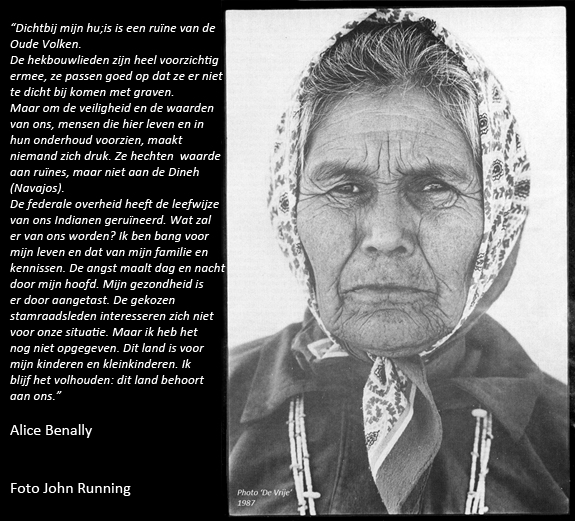
FILIBUSTER TACTIEK
Bij die laatste verkiezingen is echter ook een lichtpuntje: Larry Anderson, lid van de Amerikaanse Indiaanse Beweging (AIM), wordt in de stamraad gekozen. Toen MacDonald eerder stamraadsvoorzitter was, heeft hij deze militante Indiaan een paar keer in de gevangenis gegooid. Onder andere gebeurde dat een keer, toen Anderson en andere AIM-leden de zwaar uitgebuite Indiaanse werkneemsters van een halfgeleidersfabriek van Fairchild te hulp kwamen en een gewapende bezettingsactie uitvoerden. De ironie van deze aktie was, dat de AIM naderhand veel steun van de Navajos heeft verloren, omdat het Fairchild te heet onder de voeten werd en zij uitweek naar de derde wereld. Een belangrijke werkverschaffer was hiermee weggevallen. Larry Anderson zal, desnoods met zijn leven, de mensen verdedigen die weigeren te verhuizen. De vraag is echter wel of hij nu juist in die stamraad zoveel kan bereiken. Hij heeft al aangekondigd er niet voor te schromen de tactiek van de ‘filibuster’ te gaan gebruiken. Dat wil zeggen dat de spreker in de raad over een onderwerp zo lang aan het woord blijft dat het nemen van een bepaald besluit onmogelijk wordt.
De komende maanden lijken, zowel voor de verhuizingsoperatie als voor het verzet daartegen, beslissend te gaan worden. De tactiek van de regering zou wel eens kunne zijn dat zij de verhuizing als ‘volbracht’ verklaart, zodra de getto’s op de New Lands zijn afgebouwd. Vervolgens zou ze verschillende Hopi ranchers die zich tegen de Navajos keren, kunnen stimuleren om met hun kudden de gebieden in te gaan waar zich nog recalcitrante Navajos bevinden, zoals bijvoorbeeld om en nabij Big Mountain. De onvermijdelijk daarop volgende spanningen zouden de Navajos onder nog meer druk zetten om hun grond te verlaten. En de vooruitgeschoven Hopis zouden kunnen verzoeken om bijstand van buiten. De kans op massale deportaties zonder dergelijke omwegen is, nu de constructie van nieuwe huizen op de New Lands bijna is voltooid, echter ook bepaald niet denkbeeldig.
DIRECTE ACTIES
In de eerste plaats proberen Big Mountain steungroepen het nieuw gekozen Congres te bewegen tot het intrekken van de verhuizingswet, of in ieder geval tot het afkondigen van een moratorium op verdere verhuizingen. Aldus zou er een mogelijkheid ontstaan voor de Hopi en Navajo Indianen om, liefst los van de stamraden, aan een vergelijk te werken. Want dat is, nadat zij jarenlang het slachtoffer zijn geweest van verdeel- en heerstactieken, hard nodig. Parallel aan deze lobby op Washington onderneemt men pogingen om de wet ongeldig te laten verklaren op grond van het feit dat zij inbreuk maakt op de religie van de traditionele Indianen. De vrijheid van godsdienst wordt gegarandeerd in het eerste amendement van de amerikaanse grondwet.
Radicalere groepen willen niet afwachten hoe met juridische steekspelen en lobby-campagnes de wet misschien ooit nog eens zal worden ingetrokken, zij pleiten ervoor, om met woord en daad zelf de wet ongedaan te maken. Enerzijds door het voeren van harde akties tegen de betrokken ondernemingen (zoals Peabody Coal, Bechtel Corporation, Boeing), anderzijds door de Indianen die op het land willen blijven daartoe de feitelijke mogelijkheden te geven. Dat kan bijvoorbeeld door met werkbrigades (door de verhuizingswet verboden) reparaties aan de hogans uit te voeren, of er nieuwe bij te bouwen. Een andere mogelijkheid is om van buitenaf schapen naar het gebied te brengen, die de plaats kunnen innemen van de in beslag genomen dieren. De steungroep in Berkeley organiseert een vorm van economische steunverlening, waarbij traditioneel geweven kleden eerst worden gekocht van de Navajos, om ze vervolgens tegen een eerlijke prijs weer door te verkopen. Met het aldus verdiende geld kunnen dan weer nieuwe kleden worden aangekocht.
Aan dit soort directe acties kleven echter ook grote nadelen. Het is bijvoorbeeld wel mooi om de huizen te repareren en nieuwe te bouwen, maar zullen de constructieploegen er ook als de betrokken indiaanse families later de patrouillerende politie op hun dak krijgen? En creëert de alternatieve ‘ideële import’ van wollen kleden niet een nieuwe afhankelijkheid, in de zin dat men gaat rekenen op een gegarandeerde afname, die misschien, na alle beroering, weer in elkaar duikelt? Door dit soort hulpverlening ontstaat bovendien al gauw onvrede op het reservaat in de trant van: het zijn altijd dezelfden die geholpen worden, of: er zal na verkoop wel het één en ander aan de strijkstok blijven hangen.
LAAGVLIEGENDE PILOTEN
Eens te meer blijkt uit dit soort vervelende kwesties, dat het om een indiaanse kultuur gaat, die volstrekt anders in elkaar zit dan de onze. De mensen van Big Mountain hebben nooit veel met geld, media, of simpelweg de aanwezigheid van solidaire blanken te maken gehad. Na alle bemoeienis van regeringsambtenaren, counselors, indiaanse politie, laag overvliegende straaljagerpiloten, antropologen, missionarissen, en nu dan een groep sympathiserende buitenstaanders, willen deze Indianen – zo lijkt het – eindelijk eens met rust gelaten worden.
Op verschillende vergaderingen hebben de ouderen van de Hopi- en Navajostammen te kennen gegeven: jullie zijn blanken, jullie spreken de Engelse taal. Die regering in Washington is ook blank. De wet die ze daar gemaakt hebben begrijpen we niet. Als jullie ons willen helpen, dan weten jullie het beste, hoe daar wat tegen te doen is. Een andere, niet noodzakelijk minder radicale strategie is dan ook om als steungroep zo min mogelijk aktiviteiten te ontplooien op het reservaat, maar juist alle aandacht te richten op de machtscentra, op duizenden kilometers afstand, waar over het lot van deze mensen wordt beschikt.
Jan
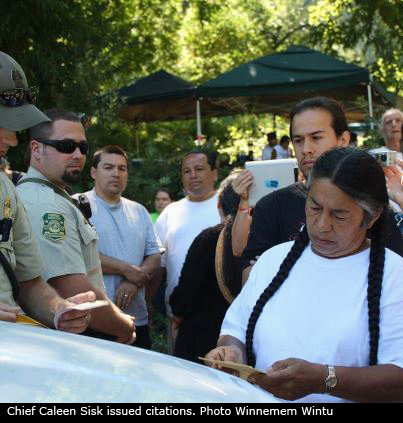
Le Service des Forêts profane le Feu Sacré sur les Pics San Francisco, après s’être livré à des insultes du même genre lors d’une cérémonie Winnemem Wintu en Californie
Par Brenda Norrell, Censored News
Merci à Indigenous Action Media et aux Winnemem Wintu
Traduction Christine Prat
Lundi 9 juillet 2012
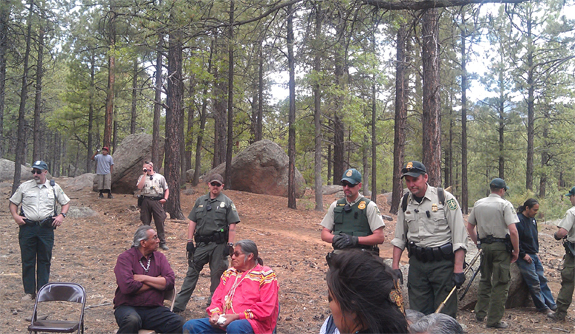
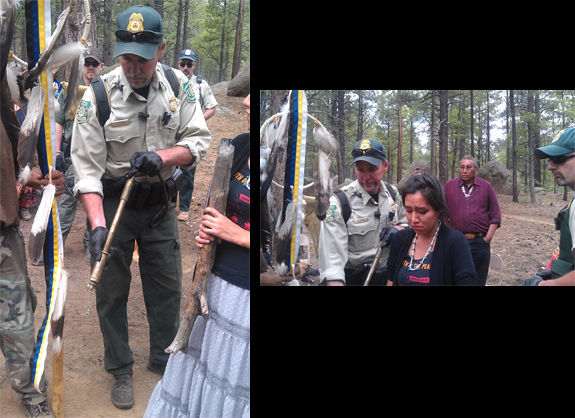
FLAGSTAFF, Arizona – Des agents armés du Service des Forêts de Coconino et des sheriffs du Comté de Coconino ont profané le Feu Sacré au cours d’une cérémonie célébrée par des Amérindiens sur les Pics San Francisco vendredi dernier.
Le Chef Lakota Arvol Looking Horse, Gardien de la 19ème Génération de la Pipe Sacrée du Bison Blanc, était présent parmi les chefs spirituels lorsque le Feu Sacré a été profané.
Parlant de l’importance du Feu Sacré, les hommes et femmes Médecine Autochtones ont dit : « Nous avons été placés sur nos terres en tant que Nations Aborigènes Autochtones des Peuples avec des instructions et des responsabilités sacrées mises en nous par le Créateur pour suivre les Lois du Créateur ».
Bien qu’un permis ait été délivré pour la cérémonie, le chef du Département de la Forêt de Coconino a apparemment changé d’avis. D’après Indigenous Action Media, des agents des forces de l’ordre sont arrivés armés d’un K-9 et une personne a été citée à comparaître.
L’action du Service des Forêts en Arizona était en tous points similaire à celle, insultante et trompeuse, commise quelques jours auparavant par des agents du Service des Forêts, au cours d’une cérémonie des Winnemem Wintu en Californie.
Un permis délivré pour la fermeture d’une rivière, initialement pour protéger une cérémonie sacrée de Maturité, a été utilisé contre les Winnemem Wintu, qui ont été cités à comparaître.
« L’Agent Forestier Régional Suppléant Becki Heath nous avait dit avant la cérémonie que les forces de l’ordre n’utiliserait pas notre fermeture de la rivière contre nous. Mais en fait, notre Chef a eu deux citations à comparaître pour avoir conduit une cérémonie que nous célébrons depuis toujours » ont déclaré les Winnemem Wintu ce jour. [Voir http://bsnorrell.blogspot.com/2012/07/forest-service-issues-citations-to.html]
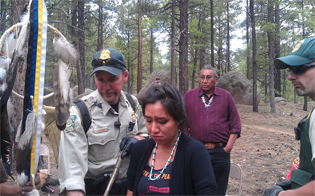
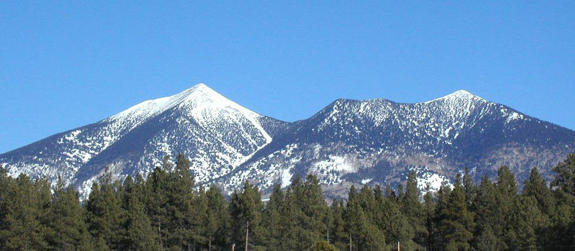
Sur les Pics San Francisco, en Arizona, des officiels du Service des Forêts des Etats-Unis ont menacé des leaders spirituels, des hommes et femmes Médecine et des Anciens de suites judiciaires s’ils entretenaient le feu sacré lors d’une cérémonie, sur ces Pics sacrés pour 13 Nations Amérindiennes, parmi lesquelles les Navajos, les Havasupai, les Hualapai, les Hopi et les Pueblos.
Les Amérindiens rassemblés ont publié une déclaration à propos de la profanation. La profanation viole les lois sur la liberté religieuse des Amérindiens.
« Bien qu’une fermeture volontaire pour le Rassemblement Culturel Traditionnel ait été initialement accordée par le Superviseur de la Forêt de Coconino, M. Earl Stewart, ce monsieur a apparemment changé d’avis et émis des menaces au premier jour de la cérémonie, qui devait en compter quatre, le 4 juillet 2012 ».
« Lorsqu’ils furent confrontés aux officiels du Service des Forêts, des membres du Conseil des Anciens et des Hommes et Femmes Médecine, le groupe qui présidait le Rassemblement Culturel Traditionnel, ont invité les officiels du Service des Forêts à se réunir avec eux pour résoudre le problème posé par le feu cérémoniel. Mais le Superviseur de la Forêt de Coconino Stewart a indiqué dans une lettre datée du 5 juillet 2012 « ne pas se conformer [à ses nouvelles dispositions – NdT] entraînerait des citations à comparaître pour avoir fait du feu et/ou campé pendant une période de restrictions sur un site fermé, sans permis spécial ».
Le Conseil des Anciens et Hommes et Femmes Médecine s’était efforcé d’informer les responsables de la Forêt Nationale de Coconino depuis décembre 2011 et avait à nouveau rencontré des gens du Service des Relations Tribales de Coconino le 27 février et le 21 juin 2012 pour répondre à d’éventuelles questions et s’assurer que le Service des Forêts était pleinement conscient des activités du Conseil.
Le 17 mai 2012, le Service des Forêts a été informé qu’un feu sacré était un élément central du Rassemblement Culturel Traditionnel.
Voir la déclaration officielle des Anciens et Hommes et Femmes Médecine :
https://chrisp.lautre.net/wpblog/?p=836
Publié par Censored News
 LES DIRIGEANTS LAKOTA POUR LE TRAITE PRESSENT LES NATIONS UNIES DE PRENDRE DES MESURES CONCRETES POUR UNE APPLICATION INTERNATIONALE DES TRAITES
3ème Séminaire des Nations Unies sur les Traités, Genève, 16-17 juillet 2012
Par Owe Aku International Justice Project (oweakuinternational@me.com)
Traduction Christine Prat
9 juillet 2012
Le Projet de Justice Internationale Owe Aku (« IJP » : International Justice Project) participe – guidé par le Conseil du Traité de la Nation Sioux des Black Hills, conduit par le Chef Oliver Red Cloud – au 3ème Séminaire sur les Traités, à l’Office du Haut Commissariat aux Droits de l’Homme du Département des Affaires Economiques et Sociales des Nations Unies. Le Chef Red Cloud a signé l’intervention personnellement. Ce 3ème Séminaire, utilisant l’étude des Nations Unies sur les Traités, Accords et Autres Arrangements Constructifs, complété par le regretté et très respecté diplomate Cubain Miguel Alfonso Martinez, est intitulé « Renforcement du Partenariat Entre les Peuples Autochtones et les Etats : Traités, Accords et Autres Arrangements Constructifs ». Il se tiendra au Siège des Nations Unies à Genève les 16 et 17 juillet 2012.
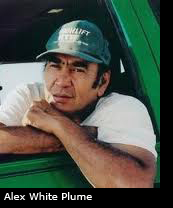
On peut lire le document du Projet de Justice Internationale Owe aku et les annotations sur : http://www.oweakuinternational.org/Owe_Aku_IJP/3rd_UN_Seminar_on_Treaties.html. Le texte de l’intervention et document de séance est signé personnellement par le Chef Red Cloud et sera transmis aux Nations Unies à Genève par le Eyapaha, ou Porte-parole pour le Conseil du Traité de la Nation Sioux des Black Hills, Alexander White Plume.
Le but initial du document de séance était, pour la Lakota Oyate [Nation Sioux], d’explorer, dans le cadre des Nations Unies, des mécanismes concrets, fondés sur des solutions créatives, pour appliquer la loi internationale sur les traités. Des sanctions, des pressions diplomatiques et des poursuites devant les Cours internationales ont été suggérées. Lakota Oyate est prête à affronter l’arrogance coloniale et à suggérer que la violation de la loi internationale par les Etats-Unis n’est pas différente, par exemple, de la violation de la loi internationale par l’Iran. Nous invitons les Peuples et Nations Autochtones, qu’ils aient ou non des traités, ainsi que les nations membres ayant un sens de la justice, à nous rejoindre dans cette lutte.
Le Conseil du Traité de la Nation Sioux des Black Hills est l’instance gouvernementale traditionnelle de la Nation Lakota, aussi nommée parfois Lakota Oyate ou Nation Sioux (« Sioux » est le terme colonial – inventé par les Français – NdT). Tant historiquement qu’à l’époque contemporaine, la Lakota Oyate a fourni une bonne part de la résistance la plus dure à l’acharnement du gouvernement des Etats-Unis à nier notre souveraineté intrinsèque et à envahir et coloniser illégalement notre peuple, notre territoire et nos ressources. Nous n’avons jamais été vaincus militairement par les Etats-Unis et en 1868 ils ont été obligés de signer un traité, de nation à nation, avec la Lakota Oyate. Le traité est pleinement légal et a force de loi d’après la Constitution des Etats-Unis, une décision de la Cour Suprême et l’étude des Nations Unies sur les Traités, Accords et Autres Arrangements Constructifs.
Kent Lebsock, Directeur
Owe Aku International Justice Project for Lakota Treaty Justice & Advocacy
oweakuinternational@me.com
646-233-4406
646-395-1617 (fax)
on the web at www.oweakuinternational.org
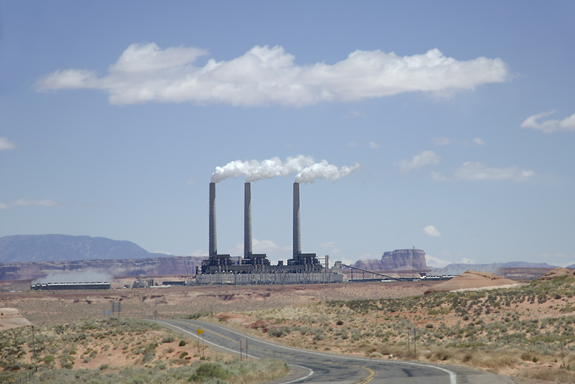
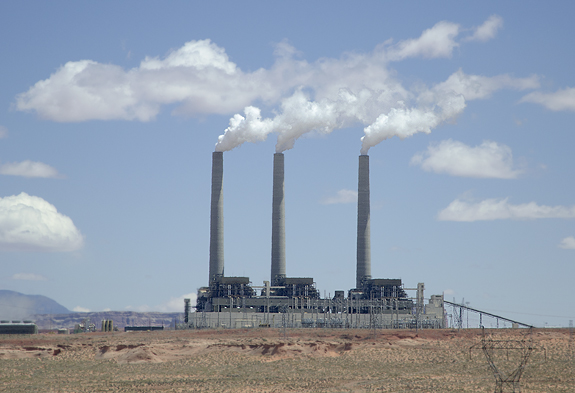
Navajo Generating Station (Centrale ‘Navajo’) près de Page, Arizona
Photo Christine Prat, avril 2011
La Centrale en question, située sur la réserve Navajo, n’a de ‘Navajo’ que le nom. Elle est gérée par la société privée – non-Autochtone – Salt River Project.
Cette centrale au charbon est l’une des plus polluante des Etats-Unis.

LE CONSEIL NAVAJO REJETTE LE REGLEMENT NAVAJO-HOPI SUR L’EAU DU LITTLE COLORADO
Par Brenda Norrell, Censored News
Traduction Christine Prat
Jeudi 5 juillet 2012
WINDOW ROCK, Arizona – Le Conseil de la Nation Navajo a rejeté l’Accord de Règlement pour la rivière Little Colorado jeudi après-midi. Le vote a été de 15 contre, 6 pour et 3 abstentions.
Les Navajos opposés au règlement disent qu’il s’agit d’un plan concocté par des sénateurs d’Arizona, des politiciens corrompus et des avocats non-Indiens pour voler les droits sur l’eau des Navajos, au profit de la Centrale Navajo, une des centrales au charbon les plus sales des Etats-Unis, et pour que les non-Indiens d’Arizona puissent conserver leurs modes de vie reposant sur le gaspillage.
La déléguée du Conseil Navajo Katherine Benally dit « Je parle pour les générations futures. Je vous ai entendu, mon cher peuple. Ce règlement est le Génocide de notre nation et comme dirigeante, je ne l’autoriserai pas. En tant que femme, je prie pou l’eau, je suis derrière l’eau et prie pour elle. J’admire les efforts de mon peuple et je vous demande de me soutenir, de nous soutenir, nous les leaders dans notre progression. Saisissons-nous de ce document négatif et faisons en quelque chose de positif. Un document qui revigorera notre peuple ».
Dans son compte-rendu fait dans la chambre du conseil, l’organisation Diné Water Rights [Droits sur l’eau Navajos] dit qu’à ce jour, la plupart des délégués se sont opposés à la combine. Cette combine avait été mise en avant par les Sénateurs d’Arizona Jon Kyl et John McCain, avec les conseillers juridiques non-Indiens de la Nation Navajo. Le règlement priverait les Navajos d’onéreux droits sur l’eau selon la Doctrine Winter.
La déléguée Benally dit au conseil « Nous devons protéger ce qui nous appartient de droit. L’avidité de la compagnie Peabody et le non-respect de notre eau et de nos ressources doit cesser. » Elle est déléguée au Conseil Navajo pour Chilchinbeto, Dennehotso et Kayenta, Arizona, dans la région où Peabody Coal exploite les mines de charbon de Black Mesa. Le charbon est utilisé pour alimenter la Centrale Navajo près de Page.
K. Benally a déclaré au conseil que les communautés Navajos avaient été désinformée à propos du règlement. K. Benally dit que seulement dix fermes étaient déclarées dans le règlement. Elle a ajouté que le Conseil de l’Agence de l’Ouest avait voté unanimement contre ce règlement.
« Nous ne pouvons pas faire confiance à Kyl ! Il était l’avocat d’APS ! Il a gagné en leur faveur et trompé les indigènes ».
« Les Nations Tribales dans tout le pays nous regardent, elles attendent de voir si nous nous mettrons à genoux et plierons devant le gouvernement fédéral. Ne nous contentons pas de ne pas laisser tomber notre peuple, tous les Peuples Indigènes des Etats-Unis » dit K. Benally d’après le reportage de Diné Water Rights au conseil d’aujourd’hui, jeudi 5 juillet 2012.
Le Conseil Navajo a voté en faveur d’une législation séparée, s’opposant à la combine. Le conseil a voté à 15 contre 1 et 8 abstentions en faveur de la législation soutenue par la déléguée Benally. Avec ce texte, le conseil a voté en opposition à l’Accord de Règlement Navajo-Hopi pour la Rivière Little Colorado et à l’extension du bail pour la Centrale Navajo, tels que mentionnés dans la Loi Sénatoriale US SB 2109.
Alors que de nombreux Navajos vivent sans eau courante et sans électricité, ils vivent avec la pollution et les maladies causées par l’extraction du charbon et les centrales au charbon, en plus des puits de pétrole et de gaz et des mines d’uranium abandonnées, datant de la Guerre Froide. A part les maladies et la pollution, le sol de Black Mesa a été dévasté par l’extraction de charbon et le niveau d’eau a baissé dans les sources et les nappes aquifères, afin que Peabody Coal et la Centrale Navajo puissent produire l’électricité qui s’échappe de Navajoland [La Réserve Navajo] vers les grandes villes du sud-ouest.
Au moins 20 agents armés du Service des Forêts des Etats-Unis ont attaqué une cérémonie conduite par des Anciens Autochtones sur les Pics San Francisco, ce vendredi 6 juillet, vers minuit (heure française, 15h là-bas). Voir article précédent
Photos de Libby Williams:
Source: http://www.indigenousaction.org/armed-forest-service-agents-desecrate-sacred-fire-at-peaks-ceremony/
Vidéo: Témoignage de Klee Benally et chanson inspirée par l’incident:
Publié par Indigenous Action et Censored News (Original article in English)
Vidéo: Témoignage de Klee Benally et chanson inspirée par l’incident:
Vendredi 6 juillet 2012
Par Brett Ramey
*Déclaration des Anciens Autochtones et des Hommes et Femmes Médecine ci-joint
Traduction Christine Prat
FLAGSTAFF, Arizona – Des officiels du Service des Forêts des Etats-Unis ont menacé des leaders spirituels Indigènes, des Hommes et Femmes Médecine et des Anciens de suites judiciaires s’ils entretenaient le Feu Sacré au cours d’une cérémonie sur les Pics Sacrés San Francisco.
Bien qu’un ordre de fermeture pour permettre le Rassemblement Culturel Traditionnel ait d’abord été accordé par le Superviseur de la Forêt de Coconino par M. Earl Stewart, celui-ci a apparemment changé d’avis et émis une menace le 4 juillet 2012, alors que la cérémonie devant durer 4 jours commençait.
Lorsqu’ils furent confronté aux officiels du Service des Forêts, des membres du Conseil Indigène des Anciens et des Hommes et Femmes Médecine, qui accueille le Rassemblement Culturel Traditionnel, ont invité les officiels du Service des Forêts à se réunir avec les Anciens afin de résoudre les problèmes posés au Service des Forêts par le Feu cérémoniel. Le Superviseur de la Forêt de Coconino Stewart a signifié dans une lettre datée du 5 juillet 2012 que « ne pas se soumettre à sa décision entraînerait des citations à comparaître, pour avoir fait du feu pendant une période de restrictions et/ou pour avoir campé sur un site fermé sans permis d’utilisation spécial ».
Les Anciens et les Hommes et Femmes Médecine s’étaient employés à informer les responsables de la Forêt Nationale de Coconino de cette cérémonie depuis décembre 2011 et avaient à nouveau rencontré le service des Relations Tribales de Coconino le 27 février et le 21 juin 2012 pour répondre à d’éventuelles questions et s’assurer que le Service des Forêts était pleinement informé des activités du Conseil.
Le 17 mai 2012, le Service des Forêts a été informé que le Feu Sacré occupait une place centrale dans le Rassemblement Culturel Traditionnel.
Le Conseil des Anciens et Hommes et Femmes Médecine Indigènes demandent du soutien pour faire face à cette grave interruption et violation du Rassemblement Culturel Traditionnel. Ils vous prient de téléphoner ou d’envoyer des mails aux officiels du Service des Forêts et de leur demander instamment de ne pas attaquer ou profaner le Feu Sacré :
M. Earl Stewart Coconino Forest Supervisor
Tél. : (001 928) 527 36 00
Email : estewart@fs.fed.us
Corbin Newman Regional Forester
U.S. Forest Service, Southwest Region
333 Broadway SE Albuquerque, NM
87102
Email: cnewman02@fs.fed.us
Janie Hipp Senior Adviser for Tribal Affairs USDA
Email: janie.hipp@osec.usda.gov
Demandez au Président Obama de tenir la promesse de sa campagne de 2008 de soutenir « les protections légales pour les sites sacrés et les traditions culturelles, y compris les lieux abritant des sépultures ancestrales et des églises ».
Président Obama :
Commentaires téléphoniques : (001 202) 456 11 11
Commentaires en ligne : http://www.whitehouse.gov/contact/submit-questions-and-comments
###
Déclaration officielle des Anciens et Hommes et Femmes Médecine Autochtones
6 juillet 2012
« Le Créateur a donné au Peuple des Nations Autochtones et Aborigènes des Lois à suivre et des responsabilités concernant le devoir de prendre soin de toute la Création. Ces instructions ont été transmises de génération en génération depuis l’origine de la Création. La Loi est que personne n’est au-dessus de la Loi du Créateur, vous faites partie de la Création, donc si vous brisez la Loi, vous vous détruisez vous-même.
Nous parlons au nom de toute la Création : ceux à quatre pattes/ceux qui nagent/ceux qui rampent/ceux qui volent/ceux qui font leur terrier dans la terre/les Nations des plantes et des arbres. Ce système de vie unique inclut les quatre éléments, le feu, l’eau, la terre et l’air, l’environnement vivant de ‘Notre Mère la Terre’.
Le Sacré de la Loi du Créateur a été brisé. L’équilibre de la vie a été rompu. Vous venez à la vie en tant qu’être sacré. Si vous malmenez le caractère sacré de votre vie, cela a des conséquences pour toute la Création. L’avenir de la vie est actuellement menacé.
Nous avons atteint le croisement des voies possibles. En tant que Peuple Autochtone et Aborigène, nous vous demandons de collaborer avec nous pour sauver le futur de toute la Création. »
Le Feu Cérémoniel Saint et Sacré nous unit en tant que Nations Aborigènes Autochtones des Peuples sur notre Montagne Sacrée menacée (les San Francisco Peaks) du 4 au 7 juillet 2012.
Le Feu Cérémoniel Saint et Sacré renouvelle notre connection avec toute la Création, il porte nos prières et représente toute vie. Quand il s’agit concerne notre cérémonie ou le feu cérémoniel, il est impératif que le Service des Forêts reconnaisse que les Peuples Autochtones sont la seule autorité sur notre culture et notre mode de vie et que toutes les décisions prises sans notre consentement libre, préalable et informé sont contraires à la Déclaration des Droits des Peuples Autochtones des Nation Unies.
Il y a parmi nous une situation de grande urgence à ce que le vent, l’eau et le feu montrent leur pouvoir à cause du déséquilibre causé par un excès d’intervention humaine. Quand ces incendies brûlent à travers tout l’Ouest et partout dans le monde, ils désorganisent et détruisent non seulement l’habitat des êtres à deux jambes mais aussi beaucoup de vies et d’habitats des Nations des animaux, des plantes et des arbres.
Après avoir passé beaucoup de temps à instruire le Service des Forêts sur l’importance de notre rôle en tant que Gardiens de ce Territoire, nous éprouvons une grande tristesse pour le Service des Forêts qui n’a pas donné le choix au Conseil des Anciens et Hommes et Femmes Médecine Indigènes. Le choix de violer nos propres protocoles culturels ou de faire face à des poursuites judiciaires n’est pas compatible avec la création d’une relation de travail efficace avec les Peuples Autochtones. Le Feu Saint et Sacré continuera. Nous refusons de prendre part à cette atrocité ; c’est au Service des Forêts de décider s’il dérangera ces prières. Nous n’aurons aucune part dans cet acte ! Nos prières ont pour but de protéger la sainteté de la Montagne Sacrée menacée, et cela inclut d’obtenir le pardon pour ceux qui continuent à profaner la vie. Nous sommes des gens spirituels et nous maintenons la paix par nos cérémonies.
Nous sommes unis sous la Loi du Créateur. Nous appartenons à diverses Nations Autochtones et sommes reliés spirituellement. Nous avons été placés sur nos terres comme Nations Aborigènes Indigènes des Peuples avec des instructions sacrées et des responsabilités qui nous ont été attribuées par le Créateur pour suivre les Lois du Créateur. Les administrations fédérales emploient des termes tels que fédéralement reconnu et fédéralement non-reconnu. Nous voyons cela comme votre manière de diviser les Peuples Autochtones. Nous sommes unis sous la Loi du Créateur, comme Nations Autochtones Unies, pour protéger et étendre la Vie pour toutes les générations futures.
REPRESENTANTS DU CONSEIL
Chef Arvol Looking Horse
19ème Génération de Gardien de la Pipe Sacrée du Bison Blanc
Leader Spirituel
Nations Lakota, Dakota et Nakota
Bobby C.Billie
Chef de Clan et Leader Spirituel du Conseil d’Origine Miccosukee
Nation du Peuple Autochtone Seminole
Par Brenda Norrell
Censored News
Traduction Christine Prat
Mercredi 27 juin 2012
Les medias ont annoncé dans de fausses dépêches que la Tribu Hopi avait adopté l’accord sur la rivière Little Colorado, accord qui a pour but de donner l’eau des Hopis et des Navajos à des non-Indiens en Arizona, ainsi qu’à la Centrale Navajo (Navajo Generating Station) fonctionnant au charbon – l’une des plus polluantes des Etats-Unis – et à la compagnie charbonnière Peabody Coal.
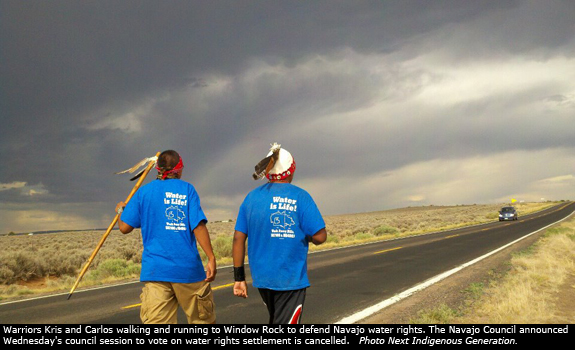
Le projet de loi, établi par les Sénateurs d’Arizona Jon Kyl et John McCain et par des avocats non-Indiens, exigerait des Navajos et des Hopis qu’ils renoncent à leurs droits aborigènes sur l’eau. Le plan de vol de l’eau est soutenu objectivement par des journalistes en chambre et des compilateurs en ligne qui ne vérifient pas les faits qu’ils publient. Kris Barney, Diné, arrivant à Window Rock aujourd’hui, après avoir marché et couru depuis l’ouest de Navajo land [la Réserve Navajo] pour défendre l’eau sacrée, a déclaré : « Nous devons rester forts et unis, avec nos pensées sacrées, nos prières et le présent qu’est l’eau que nous recevons d’en haut par la pluie. Ils ne sont pas propriétaires de la vie, ils ne devraient pas avoir le pouvoir de vendre, commercialiser ou marchander nos vies et notre futur. Les gens ont parlé. Et aussi les éclairs, dans la nuit, à travers Window Rock… »
Trois ex-Présidents Tribaux Hopi ont réagi aux faux rapports des médias et aux fausses déclarations du Président Shingoitewa à propos de la proposition de loi sénatoriale SB2109, ou ‘Loi de Règlement de la question des droits sur les eaux Navajo-Hopi de la Rivière Little Colorado’ de 2012.
Entretemps, et au dernier moment, le Conseil Navajo a annoncé que la session d’aujourd’hui du Conseil de la Nation Navajo au cours de laquelle le vote sur ledit règlement devait avoir lieu, est annulée.
Les trois précédent Présidents Tribaux Hopi ont dit dans une déclaration que le Président Tribal LeRoy Shingoitewa et le membre du Conseil George Mase avaient répandu une information fausse disant que la Tribu Hopi avait approuvé le Règlement sur l’eau, alors qu’en fait le Conseil Tribal Hopi avait voté à 11 contre 4 et aucune abstention le rejet du projet Kyl le 15 juin 2012. Plus de 100 membres de la Tribu ont été témoins de l’évènement.
« Des représentants des villages Hopi, des leaders traditionnels, des bénéficiaire et des membres de la Tribu ont présenté dans leur immense majorité des objections et rejeté la Loi Sénatoriale 2109 par écrit et oralement dans le Centre des Anciens de Hotevilla bourré de monde. La Loi Sénatoriale 2109 favorise des non-Indiens, parmi lesquels on trouve les propriétaires de la Centrale Navajo et la multinationale Peabody Coal ; exige que les Hopis renoncent à leurs droits aborigènes et fédéraux sur l’eau du Little Colorado ; et rejette toutes réclamations futures pour des dommages causés à la nappe aquifère Navajo et aux sources sacrées par la compagnie Peabody Coal et les propriétaires de la Centrale Navajo »,
« Après avoir écouté les témoignages des gens, le Conseil Tribal Hopi a adopté la Résolution N° H-072-2012 rejetant le projet de Loi SB2109 du Sénateur d’Arizona Jon Kyl. Mais Shingoitewa a refusé de signer la Résolution obligeant ainsi les leaders tribaux élus précédemment à déposer une plainte officielle auprès du Conseil Tribal Hopi exigeant la destitution immédiate de Shingoitewa.
« La Résolution du Conseil Tribal Hopi H-072-2012 ne rejette pas seulement la Loi Sénatoriale 2109, mais elle interdit également à Shingoitewa, à l’équipe pour l’Eau et l’Energie et au Conseil Tribal Hopi toutes négociations ultérieures sur la Loi Sénatoriale 2109, y compris l’Accord de Règlement. Elle exige aussi que le Président Hopi Shingoitewa rende compte de la position officielle de la Tribu Hopi au Sénateur Kyl et du rejet formel du projet de Loi Sénatoriale 2109 au Ministère de l’Intérieur. »
La position officielle de la Tribu Hopi est contenue dans la Résolution H-072-2012 qui rejette la Loi Sénatoriale 2109 et l’Accord de Règlement proposé.
Texte intégral de la déclaration des trois ex-Présidents Hopis:
En Français: https://chrisp.lautre.net/wpblog/?p=827
In English: http://www.bsnorrell.blogspot.com/2012/06/medias-false-report-on-hopi-council.html
Par les ex-Présidents Hopi Ben Nuvamsa, Ivan Sidney et Vernon Masayesva
Publié par Censored News
Traduction Christine Prat
KYKOTSMOVI, Arizona – Le Président Tribal Hopi LeRoy Shingoitewa et le Représentant George Mase ont répandu une information fausse selon laquelle la Tribu Hopi avait approuvé le projet de Loi Sénatoriale SB2109, l’Acte de Règlement des Droits Navajos et Hopis sur l’Eau de la Rivière Little Colorado de 2012, alors qu’en fait, le Conseil Tribal Hopi, par un vote de 11 contre 4 et 0 abstentions, a rejeté la loi Kyl le 15 juin 2012. Plus de 100 membres de la Tribu ont été témoins de cet évènement historique.
Des représentants des villages Hopi, des leaders traditionnels, des bénéficiaire et des membres de la Tribu ont présenté dans leur immense majorité des objections et rejeté la Loi Sénatoriale 2109 par écrit et oralement dans le Centre des Anciens de Hotevilla bourré de monde. La Loi Sénatoriale 2109 favorise des non-Indiens, parmi lesquels on trouve les propriétaires de la Centrale Navajo et la multinationale Peabody Coal ; exige que les Hopis renoncent à leurs droits aborigènes et fédéraux sur l’eau du Little Colorado ; et rejette toutes réclamations futures pour des dommages causés à la nappe aquifère Navajo et aux sources sacrées par la compagnie Peabody Coal et les propriétaires de la Centrale Navajo.
Après avoir écouté les témoignages des gens, le Conseil Tribal Hopi a adopté la Résolution N° H-072-2012 rejetant le projet de Loi SB2109 du Sénateur d’Arizona Jon Kyl. Mais Shingoitewa a refusé de signer la Résolution obligeant ainsi les leaders tribaux élus précédemment à déposer une plainte officielle auprès du Conseil Tribal Hopi exigeant la destitution immédiate de Shingoitewa.
La Résolution du Conseil Tribal Hopi H-072-2012 ne rejette pas seulement la Loi Sénatoriale 2109, mais elle interdit également à Shingoitewa, à l’équipe pour l’Eau et l’Energie et au Conseil Tribal Hopi toutes négociations ultérieures sur la Loi Sénatoriale 2109, y compris l’Accord de Règlement. Elle exige aussi que le Président Hopi Shingoitewa rende compte de la position officielle de la Tribu Hopi au Sénateur Kyl et du rejet formel du projet de Loi Sénatoriale 2109 au Ministère de l’Intérieur.
LeRoy Shingoitewa et George Mase ont diffusé une information fausse et de nature à tromper le public selon laquelle la Tribu Hopi approuvait et soutenait la loi Kyl. Ils ont agi ainsi afin de pouvoir continuer à négocier sur les droits sur l’eau du Little Colorado. Toutes négociations menées par des officiels de la Tribu Hopi constitueraient une violation directe de la Résolution H-072-2012 et fonderaient des accusations de Graves Négligences du Devoir selon la constitution de la Tribu Hopi
Shingoitewa a convoqué une réunion illégale du Conseil Tribal le 21 juin 2012, pour forcer le passage d’une résolution « adoptant » la Loi Sénatoriale 2109. Il a fait cela dans un mépris total du rejet de la loi par les Peuples Hopi et Tewa. Lorsqu’ils ont appris la nouvelle, beaucoup de membres de la Tribu se sont mis en colère et ont demandé la destitution immédiate du Président Hopi Shingoitewa et de George Mase.
La Résolution H-073-2012 n’est pas la position officielle de la Tribu Hopi et de ses membres. La position officielle de la Tribu Hopi est incarnée par la Résolution H-072-2012 qui rejette la Loi Sénatoriale 2109 et l’Accord de Règlement proposé.